Latest Trends in Web Development for 2026
 Reja Rapheekh
Updated on: January 9th, 2026
Reja Rapheekh
Updated on: January 9th, 2026


 Reja Rapheekh
Updated on: January 9th, 2026
Reja Rapheekh
Updated on: January 9th, 2026

Web development has changed significantly over the past few years, and 2026 marks a clear shift in how websites and web applications are built, scaled, and maintained. Today, users expect fast loading pages, smooth interactions, accessibility for everyone, and strong security, regardless of the device or location.
For developers, startups, and businesses, keeping up with web development trends 2026 is no longer optional. It directly impacts search visibility, user experience, and long-term growth.
In this blog, we explore the latest web development trends for 2026 in a simple, practical, and beginner-friendly way. Whether you are planning a new project or improving an existing one, this guide will help you understand where modern web development is heading and how to prepare for it.
Web development in 2026 is focused on outcomes rather than tools. Speed, stability, scalability, and usability matter more than ever. Instead of building isolated pages, teams now create complete digital systems that work across devices, locations, and user needs.
Some clear priorities define modern web development today:
These priorities shape every major trend discussed below.
One of the most talked-about latest web development trends is AI-first development. In 2026, AI tools will be deeply integrated into daily development workflows.
Developers use AI to:
For beginners, this lowers the entry barrier. AI helps explain code, suggest fixes, and guide learning. However, AI does not replace fundamental skills. Understanding logic, structure, and best practices is still essential.
Teams that succeed with AI treat it as a productivity tool rather than an automatic solution.
Another major web development trend 2026 is the dominance of meta-frameworks. These frameworks combine frontend and backend development into a unified structure.
Instead of managing multiple disconnected tools, developers can handle:
from a single framework.
For beginners, this simplifies learning. You focus on building features rather than configuring systems. For businesses, it means faster development cycles and cleaner maintenance.
This trend also supports scalability, making it easier to grow applications over time.
Edge computing has moved beyond experimentation and is now part of real-world projects. In frontend development trends 2026, edge computing plays a key role in performance and personalization.
By processing data closer to the user, edge computing helps:
Tasks like authentication checks, content delivery, and A B testing often run at the edge rather than on a central server.
For beginners, the main lesson is simple. Performance starts with architecture. Modern web development is designed to feel fast everywhere, not just locally.
WebAssembly is no longer limited to demos or experiments. In 2026, it will be used in specific performance-critical areas.
Common use cases include:
JavaScript still handles most web applications efficiently. Beginners do not need to learn WebAssembly immediately, but understanding where it fits helps with future-ready development decisions.
TypeScript continues to dominate modern web development in 2026. It has become the default language across frontend, backend, and serverless environments.
Why TypeScript is so widely adopted:
For beginners, TypeScript improves confidence. Errors are caught early, and code becomes easier to understand and maintain.
Learning TypeScript today prepares you for almost every modern web stack.
Handling data on the frontend has become more structured and predictable. Modern libraries focus on caching, synchronization, and state management without excessive complexity.
This shift improves:
Instead of manually managing loading states and API responses, developers rely on proven patterns that reduce bugs and improve user experience.
For beginners, this makes frontend development less confusing and more consistent.
CSS in 2026 is more powerful, flexible, and organized. Developers now combine utility-based approaches with native CSS features to create scalable design systems.
Modern CSS supports:
This approach helps teams maintain visual consistency across large projects. Even small websites benefit from cleaner and more maintainable styling.
For beginners, this means fewer hacks and more predictable layouts.
Accessibility is no longer optional in modern web development. Websites and applications in 2026 are expected to work for all users, including those using assistive technologies.
Key accessibility practices include:
Search engines also reward accessible websites, making accessibility a strong SEO advantage.
Learning accessibility early improves both user experience and long-term maintainability.
Performance expectations are higher than ever. Users expect websites to load fast, respond quickly, and remain stable during interaction.
Modern web development focuses on:
Performance is no longer a late-stage optimization. It is part of the core development process.
Security is one of the most critical web development trends 2026. With increased API usage and third-party integrations, security must be proactive.
Essential security practices include:
Even beginner projects benefit from understanding security fundamentals. Early awareness prevents costly issues later.
Headless architecture separates content, frontend, and backend systems. This approach is widely used in content platforms, SaaS products, and eCommerce websites.
Benefits include:
However, headless is not always necessary. Simpler projects can still succeed with traditional approaches. Choosing the right architecture depends on project goals and resources.
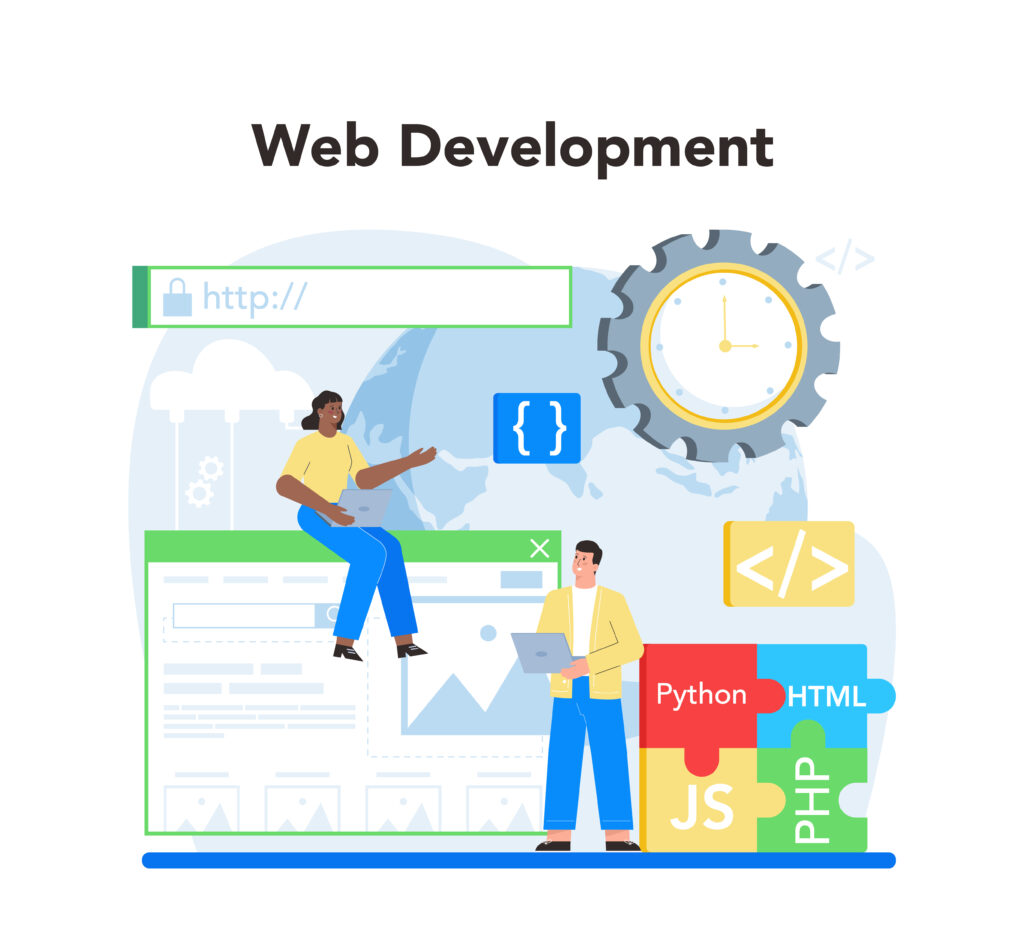
Modern web development directly impacts business growth. Performance, accessibility, and scalability influence conversions, engagement, and retention.
Working with a reliable software development company helps ensure that these trends are applied correctly and strategically.
Similarly, investing in professional web design and development ensures that user experience, performance, and SEO are aligned from the start.
If you are starting your journey, focus on strong fundamentals first.
Building step by step is more effective than chasing every new tool.
The latest web development trends for 2026 are not about complexity. They are about clarity, performance, and building experiences that work for everyone.
By focusing on fundamentals, adopting modern practices gradually, and aligning development with real user needs, developers and businesses can stay competitive in 2026 and beyond.
The future of web development rewards thoughtful decisions, not rushed adoption. Start with the basics, follow proven trends, and build with purpose.
AI-first development combined with performance-focused architecture stands out as the most impactful trend. Together, they improve productivity, speed, and user experience.
Yes. Web development continues to grow as businesses rely more on digital platforms. Developers who understand modern tools and fundamentals remain in high demand.
Not immediately. Beginners should focus on JavaScript, TypeScript, and core web concepts first. WebAssembly is useful later for performance-heavy applications.
Not always, but they help with structure, scalability, and maintenance. Even small projects can benefit from their organized workflows.
Performance, accessibility, and clean architecture directly influence search rankings. Modern web development supports better crawlability and user experience.